Love Tennis: A Designer’s Review for Real Embroidery Projects
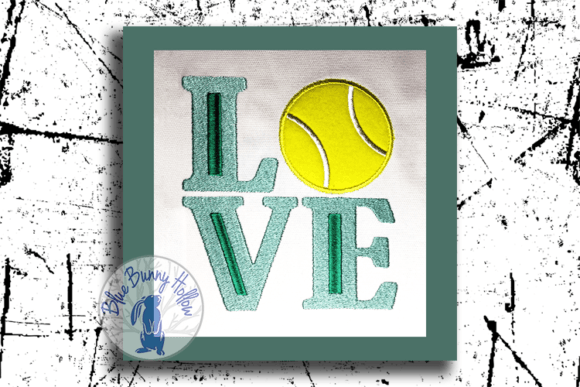
As an embroidery designer who has spent countless hours digitizing, testing, and stitching out thousands of designs, I approach every new machine embroidery design with a critical eye. It is not just about whether the artwork looks good on a screen; it is about how it translates to thread, how it behaves on different fabrics, and ultimately, how it performs in the hands of a customer or on a retail shelf. Recently, I evaluated the Love Tennis design, a playful typographic piece that swaps the letter "O" for a tennis ball. Here is my practical assessment of this Embroidery asset for real-world application.
First Impressions and Visual Personality
The immediate appeal of Love Tennis lies in its clever simplicity. The phrase "Love, set, match" is a classic tennis idiom, but the visual twist—using a tennis ball to replace the "O" in "Love"—adds a layer of wit that resonates instantly with sports enthusiasts. From a design perspective, the layout is balanced. The typography feels modern yet approachable, avoiding the overly aggressive or rigid fonts often seen in traditional Sports merchandise. This makes it versatile. It does not scream "competitive league"; instead, it whispers "weekend player" or "tennis mom," which broadens its market appeal significantly.
The mood created is lighthearted and affectionate. For a crafter or Etsy seller, this emotional connection is vital. Customers are not just buying a stitched pattern; they are buying a way to express their identity. The design’s clean lines suggest it will stitch out cleanly, provided the digitizing supports the curvature of the ball and the integrity of the surrounding letters.
Real-World Application: The Tote Bag Test
To truly understand the value of an embroidery file, I mentally place it into a specific project scenario. Imagine preparing a custom canvas tote bag for a local tennis club’s end-of-season gift. Canvas is a sturdy, woven fabric that generally handles embroidery well. In this context, Love Tennis shines. The contrast between the bright yellow-green of the tennis ball and the neutral tone of the canvas creates a pop of color that draws the eye.
If I were producing this as a handmade product for a small shop, I would consider using a satin stitch for the text to give it a smooth, premium finish, while employing a textured fill stitch for the tennis ball to mimic the fuzzy surface of a real ball. This combination of stitch types adds depth and tactile interest, elevating the perceived value of the finished product. For a tote bag design, the size needs to be substantial enough to be readable from a distance but not so large that it distorts the fabric. This design’s proportions seem ideal for a medium-sized hoop, sitting comfortably on the front panel without overwhelming the bag’s structure.
Apparel and Custom Gear Potential
Beyond bags, this design is a strong contender for custom apparel. Picture it on the chest of a high-quality cotton sweatshirt. The sweatshirt embroidery market is huge, particularly for personalized gifts. The playful nature of the design makes it suitable for both adults and children. For baby embroidery projects, such as a onesie for a child of tennis-playing parents, the design could be scaled down. However, one must be cautious. When scaling down, the details of the tennis ball’s seam lines might become too dense, leading to puckering. In such cases, simplifying the ball’s detail or increasing the overall size slightly might be necessary to maintain stitching clarity.
For caps and hats, the curved surface presents a challenge. Typographic designs can distort if not properly stabilized and hooped. If you plan to use Love Tennis on a cap, ensure your digitizer has accounted for the pull compensation. A running stitch outline might help secure the fabric before the heavier fills begin, preventing shifting during the sewing process.
Technical Considerations and Fabric Choices
While Love Tennis is visually appealing, its success depends heavily on technical execution. Here are the key areas where I advise caution and careful planning:
- Fabric Texture and Weight: On thin or stretchy fabrics, such as performance athletic wear, the density of the stitches can cause bunching. Always use a appropriate stabilizer. For knits, a cut-away stabilizer is usually best to support the stitches over time. For woven fabrics like linen or cotton, a tear-away may suffice, but test first.
- Thread Color Contrast: The design relies on the recognition of the tennis ball. If you stitch the ball in a color too similar to the text or the background fabric, the joke is lost. High contrast is key. Use bright, traditional tennis ball yellow against darker texts or backgrounds to ensure the "O" stands out.
- Stitch Density: Check the stitch count and density settings in your software. If the tennis ball area is too densely stitched, it can become stiff and heavy. Adjusting the underlay and reducing fill density can make the final embroidered patch or direct stitch softer and more comfortable against the skin.
- Small Details: Inspect the corners of the letters and the seams of the ball. Tiny details can get lost if the needle size is too large or if the thread tension is off. A size 75/11 needle is often a safe bet for general polyester threads, but always test on scrap fabric.
Commercial Viability for Craft Businesses
For craft business owners and digital embroidery file sellers, Love Tennis offers strong commercial potential. It fits neatly into several lucrative niches: holiday gifts for Father’s Day or Christmas, birthday presents for sports lovers, and team merchandise. Its versatility allows it to be marketed as a unisex design, appealing to a broad demographic.
When creating printable mockup images for your online store, show the design on various items. Display it on a crisp white towel, a navy blue hoodie, and a pastel pink baby blanket. This helps buyers visualize the design assets in their own lives. Remember, buyer engagement increases when they can see the practical application of the design. Highlight its suitability for holiday embroidery projects or as a unique addition to a boutique’s seasonal collection.
Final Verdict and Designer Notes
In conclusion, Love Tennis is a well-conceived design that balances humor with aesthetic appeal. It is an ace choice for tennis aficionados, as the description suggests, but its utility extends beyond just fans. It is a solid addition to any designer’s library for creating personalized, sporty, and charming items.
Before you commit to a large production run or list it as a top seller, follow these final steps:
- Test on Scrap Fabric: Always stitch out a sample on the same type of fabric you intend to use for the final product. This reveals any tension issues or registration errors.
- Check Licensing: Confirm the license terms provided with the digital embroidery file. Ensure you have the right to use it for commercial purposes if you plan to sell finished items.
- Review Hoop Size: Verify that the design fits within your machine’s hoop capabilities. If it requires a large hoop, ensure your customers or clients are aware of this requirement.
- Mockup in Black and White: Sometimes, viewing the design in grayscale helps identify contrast issues and shape clarity that color might mask.
By treating Love Tennis with the professional scrutiny it deserves, you can ensure that every embroidery project you create with it meets high standards of quality and customer satisfaction. Whether for a small shop product or a cherished personalized gift, this design has the potential to deliver both style and sentiment.